 |
| obsidian flow |
Saturday, September 17, 2011
knapping: a big job

I nearly died in completing this assignment.
(I'm very sorry about the late post, everyone. I guess what happened was that for some reason with all the videos and pictures I had in here, the schedule feature didn't work the way it was supposed to. I've put the text up now, so you can at least see something, but I can't get anything to upload at the moment, and I'll have to try to put the pictures and videos back in when I can go find a better internet connection. Sorry for the inconvenience; I guess this is what I get for taking a class that forces me to learn a whole new medium.)
I’m pretty good at a lot of things. Maybe that’s not particularly humble of me to say, but it’s true. However, I am not good at everything. This week is proof.
I’m pretty good at a lot of things. Maybe that’s not particularly humble of me to say, but it’s true. However, I am not good at everything. This week is proof.
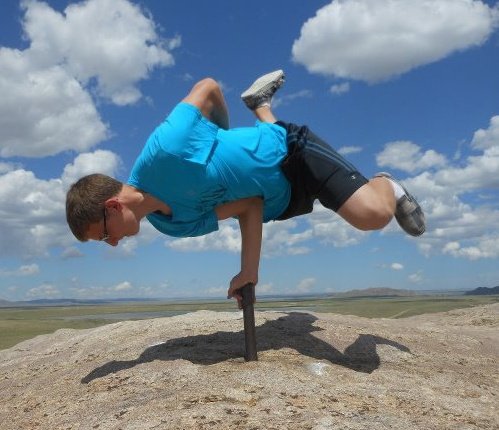
I enlisted my 15-year-old brother, Bennett, to teach me
something about an area of folk knowledge I had never previously attempted:
break dancing.
Friday, September 16, 2011
some glow stick fun

The ancient (well actually very modern) art of rave glow
sticking is wrought with intricacies. At my friend’s request, it was my task to
teach her those intricacies in one afternoon. And after some smacking of oneself with the
glow sticks, mostly on her part, she managed to learn two tricks! It was a very
fun experience!
Manicures for Boys 101.
So I was at dinner a few days ago with friends brainstorming a list of things that I could teach someone. I listed off a few ideas such as teaching the alphabet in sign language, teaching someone how to sing in Korean, or teaching someone how to bat correctly when playing softball. But as I was listing these ideas off, my friend suddenly asked "Can you teach me how to paint my nails?!" He's a boy...
So we scheduled a time for me to give him a manicure. After scrubbing and cleaning his nails, I showed him how to paint and apply with a second coat:
 |
| He choose the color blue for the big game tomorrow. |
Then I let him give it a shot and he tried painting his middle three fingers:
 |
Here's the end result:
 |
| Tyler |

Facials: cucumbers not (necessarily) included
 Regrettably, I must report that I did not learn a useful skill. I enjoy being adventurous, so finding something new was a bit difficult. I had my heart set on learning to ride the unicycle but that fell through. So I was left with something uncomfortable that I had never done before: Facial/Manicure night. My whole life I had always found a way to avoid it a pressing homework project, early class the next day, a late work schedule, but now the time had come not just to experience it, but to learn it. So I braced my self for an evening of green glorp, cucumbers, and nail files. Only to be surprised.
The Calendar
What do birthdays, holidays and the last day of school all have in common? They're things everyone looks forward to! But how are they determined? Thanks to many cultures before us, we use what is called a calendar to measure quantities of time, which help us to figure out when events take will take place.
The calendar measures quantities of time such as years, months, and days. One well known lunar calendar was created by the Mayans, a people who "revolved around the concept of time." (History of Mayan Culture) It was created in order to plan and determine agricultural and religious events. They used a vigesimal numbering system (base 20), which was most likely developed by counting the number of fingers and toes on a person. The Mayans were the first known successful civilization to determine the measure of a year and of a day.
The Julian calendar, a revision of the Roman Calendar, was created during the time of Julius Caesar. I was based around the sun and divided the calendar into twelve months. However, it failed to account for a leap year which set the dates off track.
The Gregorian calendar, which is most commonly used today in Western cultures, was developed by Pope Gregory XIII takes into account both lunar and solar forms of tracking time. It uses the lunar system in order to track religious and significant historical dates, while also using the solar method in order to accurately determine the change of time. It accounts for a leap year, unlike the others.
Today, many people use calendars such as these to celebrate specific events, such as holidays, birthdays or anniversaries, as mentioned above. I just thought I'd post about time since my birthday is coming up and I thought it was interesting how people were able to document and pass on their knowledge about sequences of events!
The calendar measures quantities of time such as years, months, and days. One well known lunar calendar was created by the Mayans, a people who "revolved around the concept of time." (History of Mayan Culture) It was created in order to plan and determine agricultural and religious events. They used a vigesimal numbering system (base 20), which was most likely developed by counting the number of fingers and toes on a person. The Mayans were the first known successful civilization to determine the measure of a year and of a day.
 |
| Traditional Mayan calendar. |
The Gregorian calendar, which is most commonly used today in Western cultures, was developed by Pope Gregory XIII takes into account both lunar and solar forms of tracking time. It uses the lunar system in order to track religious and significant historical dates, while also using the solar method in order to accurately determine the change of time. It accounts for a leap year, unlike the others.
 |
| Gregorian calendar. |
Today, many people use calendars such as these to celebrate specific events, such as holidays, birthdays or anniversaries, as mentioned above. I just thought I'd post about time since my birthday is coming up and I thought it was interesting how people were able to document and pass on their knowledge about sequences of events!
Thursday, September 15, 2011
A Whistle to Carry You Home
WARNING: THIS POST MAY GIVE YOU NIGHTMARES!
So as I have been researching about ancient cultures I have become fascinated with the Aztec Empire of Mexico. Last week I talked a little bit about the medical practices of the Aztecs and other pre-colombian cultures. Sadly, not even modern medicine has advanced enough to let us live forever and death is inevitable for us all. I stumbled across a video on the internet that freaked me out and intrigued me enough that I decided to investigate some more about Aztec beliefs about the passing from this world to the next. Before showing it though I need to explain a little first.
 |
| Quetzalcoatl and Mictlantecuhtli (god of the underworld) |
Subscribe to:
Posts (Atom)