The English Dictionary is the second most purchased and most used book behind the Bible only. Of course, there isn't just one dictionary or version of it, just like there are multiple versions of the Bible. Nevertheless, it is a popular book. But as one renown dictionary maker (also known as a lexicographer) said, it is meant to be browsed in, not read cover to cover.
There are several parts of language, and one of them is the actual words that are used, the vocabulary or the lexicon of a language. This is what a dictionary is meant to help with at its fundamental level: allow people to understand the lexicon of the language. That is why the first dictionaries were what we would call translation dictionaries and have two different languages in them, usually comparing Latin to some other language. Later the idea developed to define the vocabulary of one language, creating monolingual dictionaries. Then the development of ordering a dictionary in alphabetical order was introduced by Englishman Robert Cawdery, which became such an intrinsic part of dictionaries that books that don't do anything similar to a dictionary (define the lexicon) have acquired the title because of the alphabetical listing of their entries. Then, finally there was the idea of an American dictionary, because our version of English was different from the British, and that's how Merriam-Webster became a household name.
But really, you don't want to hear the story of the dictionary. You would much rather hear about my story in the library finding out about dictionaries. I dislike the fact that we have to put our annotated bibliography in alphabetical order, because that doesn't fit the order of the story, so I have numbered them in chronological order if you want a continuous story of discovery.
Showing posts with label bibliography. Show all posts
Showing posts with label bibliography. Show all posts
Tuesday, November 29, 2011

Monday, November 28, 2011
Annotated Bibliography: Censorship in Elizabethan England
For
my annotated bibliography assignment, I decided to learn a little bit about censorship
in Elizabethan England. Censorship is a topic that I’m very interested in, but
it’s such a huge topic that I wouldn’t have known where to start if I was just
researching anything to do with it, so I wanted to narrow it down somehow. The
Tudors made for some of my favorite English royal drama, Elizabeth I is one of
my favorite people, and Shakespeare was producing his work during the
Elizabethan and Jacobean (Stuart) Eras, so I decided to learn everything I
could about censorship in the Elizabethan Era. There weren’t very many books on
that specific topic, but I was able to find several books in the library in
which the issue was at least addressed on some level, and I used interlibrary
loan to have a few other books sent over.
Print Distribution and Dissemination.
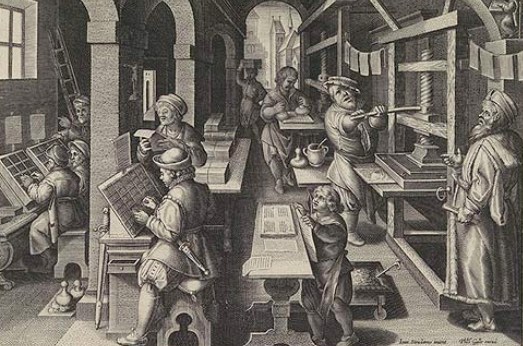
As you can tell from my previous blog posts, I am intrigued by the idea of printing and how it affected society today. I'm grateful that Johannes Gutenberg invented the printing press during the Renaissance Era, because it changed how people back then and even still today receive and distribute knowledge. Without it, the education system, the legal system and many other aspects of society today would be completely different and would most likely be more oral based and involve a great deal of memorization.
To show my appreciation for print, distribution and dissemination during the Reniassance Era, I decided to do some investigating on this subject. I searched the Harold B. Lee Library and made my way to the fifth floor to scope out some books on the topic.
Saturday, November 19, 2011
Ah my old nemesis...Spelling
All my life I have been a horrible speller. Going to bed early on Christmas eve was never a problem because my family would always have a giant family Scrabble competition into the wee hours of the morning (thought still retiring before St Nick made an appearance). Who wants to be awake for that? When I learned that spelling and punctuation were not standardized in the distant past, I thought it was the most brilliant idea ever. But, like many of you, when I try to read old documents I shake my fists and shout to the heavens "had these people no sense of language?" Standardization is important for more universal understanding and this standardization has been facilitated and fostered by print and publishing.
I have compiled an annotated bibliography of useful sources on the standardization of spelling. I hope you find it informative.
I have compiled an annotated bibliography of useful sources on the standardization of spelling. I hope you find it informative.
Subscribe to:
Posts (Atom)