Technology inherently replaces the obsolete to a varying degree. One should view different knowledge mediums pseudo technology in of themselves. Each medium can be thought of as an invention or revolution in the way humans think. While no knowledge medium is ever completely eradicated, history shows that each newly invented medium replaces the previous medium as the dominate way to communicate knowledge.
Showing posts with label Printed Knowledge. Show all posts
Showing posts with label Printed Knowledge. Show all posts
Wednesday, December 14, 2011

Tuesday, December 13, 2011
Final Post: Community and Communication
This morning we gathered in small groups to discuss each unit covered in the course (folk knowledge, oral knowledge, written knowledge, print knowledge). I enjoyed getting some new perspectives on my thoughts on the connection between the mode of communication and the type of community formed. The last rotation, focused on print knowledge with Brianne and Montana, was particularly helpful. In my notes for the final, I mentioned my impression that studying different mechanisms of communicating knowledge affected how our group interacted; discussing with my classmates helped my expand that idea to the cultures that we studied in the course. The broader the reach of the a type of knowledge, the larger but less intimate community it forms.
Oral Knowledge: Spirituality and Religious Practice
Oral Knowledge: Spirituality and Religious Practice
Within history, oral knowledge has had a more powerful effect upon spirituality and religious practice than other types of knowledge. Word of mouth has been more influential upon religion, because it is considered a more sacred means of communicating and relaying knowledge, it is personable to religious followers, and it is a means of communication that has paved the way for other areas of knowledge.
Saturday, December 10, 2011
Thoughts on my Library Exhibit Exploration
It might be too late to get credit for my visit to the Bible exhibit, but I did go earlier, I just forgot to post on it, until I reviewed the posts I have made and it wasn't in there. I even tried to go to the print museum, but that failed when I arrived 1 hour after it closed. Who closes at 2 p.m.? So then I visited the HBLL exhibit instead.
Anyway....
Anyway....
Wednesday, December 7, 2011
Learning is the Purpose... Or is it to Produce a Paper?
 |
| A master of comic rhyme in our time, I had to add him in. :-) |
(I am building my argument... please keep reading...)
Tuesday, December 6, 2011
Draft of "Vesalius and the Press"
Hey guys. I am posting this draft as a google doc. Anyone can edit the document but please don't just delete things or I won't notice you did that, also make all comments with a different color of text please so they are easy to find. Some questions I have are: does the intro sound too cheesy? Does my argument make sense and is it cohesive or does it sound too superficial? I am still planning on putting a opposing viewpoint part in the conclusion paragraph or its own paragraph before it. Any comments would be GREATLY appreciated. (I realize that I did not put the citations at the bottom but I am going to work out the citations and formatting tomorrow)
Here's the LINK
Thanks
Here's the LINK
Thanks
Monday, December 5, 2011
Frustration
 So I have been in the library for a few hours and realized why I am not a history major. History essays are really hard for me to write. I feel like in other subjects you have to understand a concept pretty well to write an essay but for history you have to do 3 times as much research. I am still trying to formulate my thesis statement. I am thinking of doing something about either Vesalius that I referenced in my last blog post or maybe I will talk about the resurgence of popularity of the texts of the ancient Greek philosopher and physician Galen. Or maybe both of them. I am still figuring everything out. Hopefully I will get it all figured out soon to post a thesis statement up here and get my draft done for tomorrow. Otherwise it will be a late night. Any insight would be much appreciated.
Thursday, December 1, 2011
On the Fabric of the Human Body

Tuesday, November 29, 2011
The Story of the Dictionary (and my discovery of it)
The English Dictionary is the second most purchased and most used book behind the Bible only. Of course, there isn't just one dictionary or version of it, just like there are multiple versions of the Bible. Nevertheless, it is a popular book. But as one renown dictionary maker (also known as a lexicographer) said, it is meant to be browsed in, not read cover to cover.
There are several parts of language, and one of them is the actual words that are used, the vocabulary or the lexicon of a language. This is what a dictionary is meant to help with at its fundamental level: allow people to understand the lexicon of the language. That is why the first dictionaries were what we would call translation dictionaries and have two different languages in them, usually comparing Latin to some other language. Later the idea developed to define the vocabulary of one language, creating monolingual dictionaries. Then the development of ordering a dictionary in alphabetical order was introduced by Englishman Robert Cawdery, which became such an intrinsic part of dictionaries that books that don't do anything similar to a dictionary (define the lexicon) have acquired the title because of the alphabetical listing of their entries. Then, finally there was the idea of an American dictionary, because our version of English was different from the British, and that's how Merriam-Webster became a household name.
But really, you don't want to hear the story of the dictionary. You would much rather hear about my story in the library finding out about dictionaries. I dislike the fact that we have to put our annotated bibliography in alphabetical order, because that doesn't fit the order of the story, so I have numbered them in chronological order if you want a continuous story of discovery.
There are several parts of language, and one of them is the actual words that are used, the vocabulary or the lexicon of a language. This is what a dictionary is meant to help with at its fundamental level: allow people to understand the lexicon of the language. That is why the first dictionaries were what we would call translation dictionaries and have two different languages in them, usually comparing Latin to some other language. Later the idea developed to define the vocabulary of one language, creating monolingual dictionaries. Then the development of ordering a dictionary in alphabetical order was introduced by Englishman Robert Cawdery, which became such an intrinsic part of dictionaries that books that don't do anything similar to a dictionary (define the lexicon) have acquired the title because of the alphabetical listing of their entries. Then, finally there was the idea of an American dictionary, because our version of English was different from the British, and that's how Merriam-Webster became a household name.
But really, you don't want to hear the story of the dictionary. You would much rather hear about my story in the library finding out about dictionaries. I dislike the fact that we have to put our annotated bibliography in alphabetical order, because that doesn't fit the order of the story, so I have numbered them in chronological order if you want a continuous story of discovery.
Monday, November 28, 2011
Print Distribution and Dissemination.
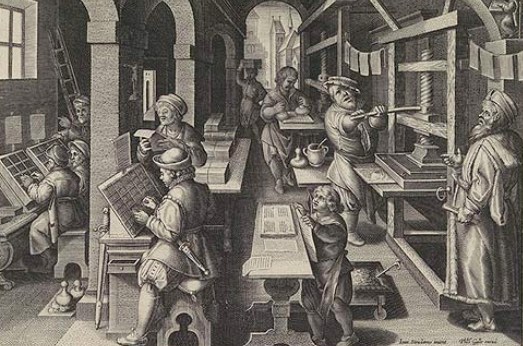
As you can tell from my previous blog posts, I am intrigued by the idea of printing and how it affected society today. I'm grateful that Johannes Gutenberg invented the printing press during the Renaissance Era, because it changed how people back then and even still today receive and distribute knowledge. Without it, the education system, the legal system and many other aspects of society today would be completely different and would most likely be more oral based and involve a great deal of memorization.
To show my appreciation for print, distribution and dissemination during the Reniassance Era, I decided to do some investigating on this subject. I searched the Harold B. Lee Library and made my way to the fifth floor to scope out some books on the topic.
Thursday, November 24, 2011
Print and its Effects on Medical Advances
(So according to some suggestions by our professor I'm adding this note. This post is part of my ANNOTATED BIBLIOGRAPHY assignment. The bibliography is below the page break and is about THE EFFECTS OF PRINT ON MEDICAL KNOWLEDGE.)
Venturing into the strange world physical research in a library with actual books, moving bookshelves, and code-like numbers on the sides of these books can be a pretty scary task for today's college student. I probably do about one or two research assignments in the library each semester, but I swear that each time a have I have to again overcome my fear of doing research and actual physical movement at once. I also have to relearn how to look stuff up there every time I try to use the numbering system, which reminds me of the library card song from Arthur - An integral part of my childhood. Please enjoy:
* * *
Venturing into the strange world physical research in a library with actual books, moving bookshelves, and code-like numbers on the sides of these books can be a pretty scary task for today's college student. I probably do about one or two research assignments in the library each semester, but I swear that each time a have I have to again overcome my fear of doing research and actual physical movement at once. I also have to relearn how to look stuff up there every time I try to use the numbering system, which reminds me of the library card song from Arthur - An integral part of my childhood. Please enjoy:
"Who's Dewey?": one of those questions we will never know the answer to. . . or maybe we could look him up on wikipedia. Anyway, after getting reacquainted with the cataloguing system again, (which is actually not the Dewey Decimal System in the HBLL) I started to search for books that teach about how the printing press affected medicine. So here it is:
Friday, November 18, 2011
King James Bible Exhibit.
This past week I visited the Life and Legacy of the King James Bible exhibit in the Harold B. Lee Library. In his most recent blog post, Will analyzed the whole exhibit and explained the pros and cons of translating the Bible. (I encourage everyone to read his post). However, I personally found it interesting how the translated King James Bible has affected society, especially American society from the 1800s to date.

King James I of England ordered that a uniform translation of the Bible would begin in 1604. The translation was complete in 1611. "Cultural, religious, and political forces over the next half century of this version's existence finally contrived to make the King James Bible the only used in England. The King James Bible traveled with the British as they colonized the world" (King James Bible exhibit pamphlet). This means that as people began to come to America for political and religious freedom, they brought the King James Bible with them.
"Publicly and privately, the King James Bible was read, heard, and studied by countless individuals in English-speaking countries and territories, and its language and style shaped their own thoughts and writings. Critics note the influence of the King James Bible—not just the stories, but the syntax and style—in works by many great orators and authors of the 18th, 19th and early 20th centuries, especially in the United States" (Transforming the Word).
Famous Americans throughout history such as Abraham Lincoln, Herman Melville and John Steinbeck were influenced greatly by the Bible. All used imagery, repetition or allusions to the King James version of the Bible (Transforming the Word). This, in turn, influenced the political and social aspects of American society as people read their novels and followed politics closely.

Religiously, the King James Bible was, and still is, used by many of the Protestant churches that flourished in America. The Church of Jesus Christ of Latter-day Saints, which is not considered a branch of Protestantism, uses the King James Bible as well. In fact, Joseph Smith translated portions of the King James Bible in the 1800s to help clarify the meanings of some passages. In addition, there are cross references in the Book of Mormon to the King James Bible in order to make studying and feasting upon the scriptures much easier for Latter-day Saints. Today, the King James Bible is the most popular Bible used in America by multiple religions. This is significant in that America was founded on the belief of religious freedom. With most religions using and basing their faith off of the King James Bible, it seems that even today is one of the most influential works printed and read.
"Publicly and privately, the King James Bible was read, heard, and studied by countless individuals in English-speaking countries and territories, and its language and style shaped their own thoughts and writings. Critics note the influence of the King James Bible—not just the stories, but the syntax and style—in works by many great orators and authors of the 18th, 19th and early 20th centuries, especially in the United States" (Transforming the Word).
Famous Americans throughout history such as Abraham Lincoln, Herman Melville and John Steinbeck were influenced greatly by the Bible. All used imagery, repetition or allusions to the King James version of the Bible (Transforming the Word). This, in turn, influenced the political and social aspects of American society as people read their novels and followed politics closely.
Religiously, the King James Bible was, and still is, used by many of the Protestant churches that flourished in America. The Church of Jesus Christ of Latter-day Saints, which is not considered a branch of Protestantism, uses the King James Bible as well. In fact, Joseph Smith translated portions of the King James Bible in the 1800s to help clarify the meanings of some passages. In addition, there are cross references in the Book of Mormon to the King James Bible in order to make studying and feasting upon the scriptures much easier for Latter-day Saints. Today, the King James Bible is the most popular Bible used in America by multiple religions. This is significant in that America was founded on the belief of religious freedom. With most religions using and basing their faith off of the King James Bible, it seems that even today is one of the most influential works printed and read.
Subscribe to:
Comments (Atom)