Showing posts with label Writing. Show all posts

Tuesday, November 15, 2011

The Rosetta Balsa Wood

So here is the picture of our final product for the Rosetta Stone Project.  Yes that's right - you have here a sampling of modern English, Akkadian written in cuneiform, and some Mayan glyphs (you have to turn your head to read them by the way).

So the process after receiving our Akkadian clay tablet was a lot harder than anyone expected.  A number of us started to try to find the characters and look up which syllables they represented independently.  Luckily Erin was able to visit with a professor who gave her some more direction.  It turns out that not all the characters were actually correct - revealing to us why it was no one could find a few of them.  After translating all we could, we had to find the original document that the other group used in order fill in the gaps and get it translated to English ---------->
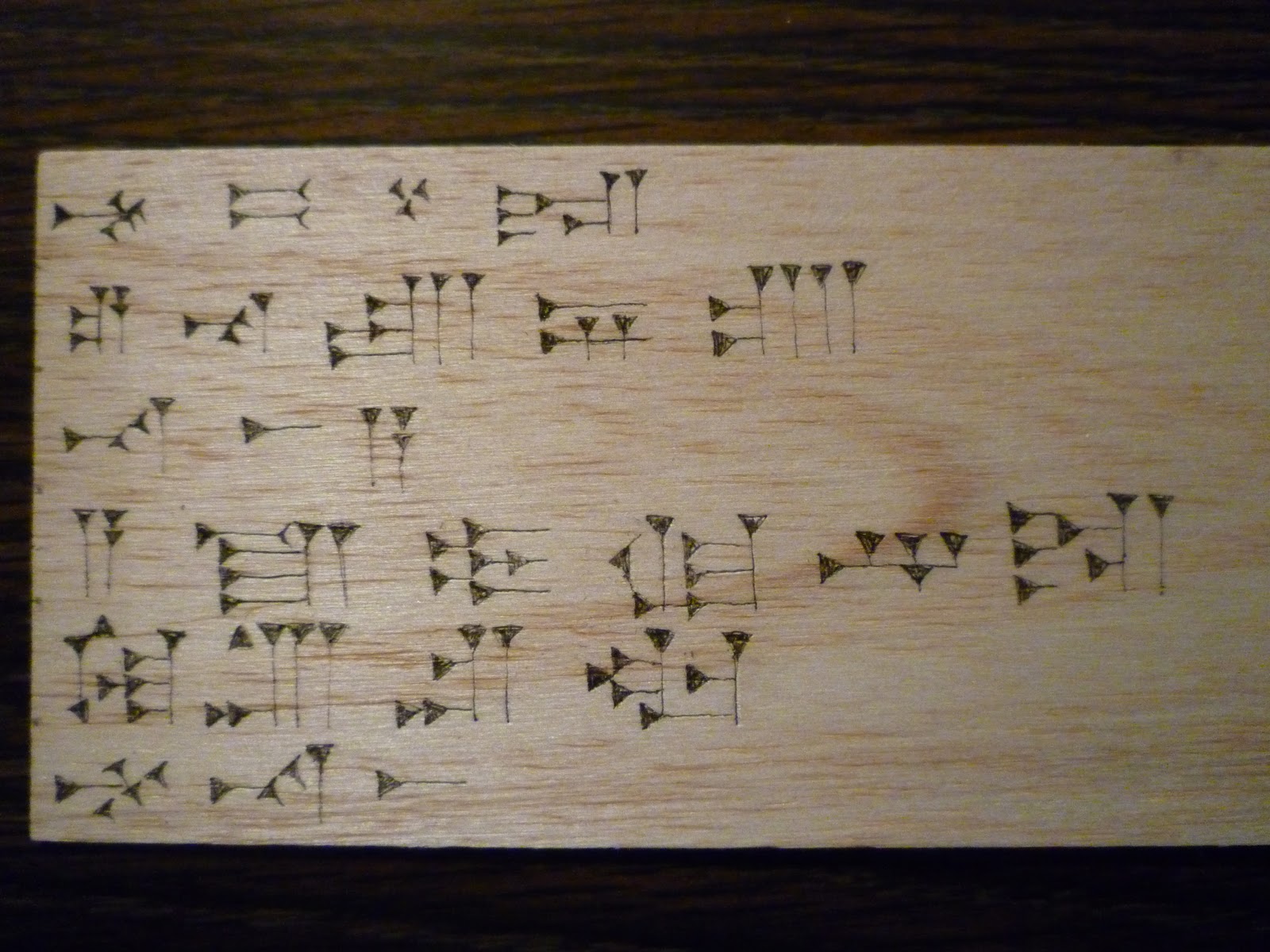
 

 With that done, Holland and Brianne headed up the artistic process (with Will's help and materials of course) of getting the cuneiform written on our "wood paper." This also proved to be very difficult because the ink bleeds easily in the porous wood.  They ended up having to use a SUPER fine pen to get everything to fit as small as possible.

I again was in charge of the Mayan translation which was difficult of course, because 1-Mayan is not completely deciphered yet 2: I am still shady on Mayan syntax and grammar 3: There are not equivalent words in Mayan, English, and Akkadian.   This is something that I have realized as I have volunteered as a Spanish medical translator too.  Sometimes things really are just "lost in translation," whether it is because of translator error, or meanings difficult to express in another language, copy errors, bias of a translator, or just plain laziness in translation.  It is not an easy task.

This was a difficult assignment for MANY reasons but I really liked the idea of it and had fun learning about these mayan glyphs.  I think that it really helped me understand how knowledge is passed on and how that really has changed from the age of writing to typing to the pixel.  I also think this project helped us think creatively in order to solve problems that were completely unfamiliar to us.

Friday, November 11, 2011

The Chinese gift

Qufu
For the Rosetta stone project  I had the opportunity to work with the group representing Asia. Two of us represented China, one Japan, and one Cambodia. Because the majority of our group represented China, and China represents the majority of the world, we thought it best to portray China in our project.
Our first thought was to have a quote from Confucius on rice paper. This would have been culturally significant because paper was invented in China (see Shuan's post on this). However, attempts at making rice paper were disastrous. Contrary to popular belief, at least my own and that of my group members, rice paper is not actually made out of rice. It is made out of rice straw or more modernly wood fiber,, mulberry, or bamboo. Also the arguably most famous Confucius artifact is actually the Confucius temple of Qufu. Confucius sayings are inscribed in stone.


Going Mayan

Me trying out different inks with the sketches.
Will and I are in the same group for the Rosetta Project so he made a wonderful post about the process of creating our rosetta thing.  He pretty much summed up that whole process so I won't add much to what he said.  I instead wanted to blog a little about the process of coming up with the writing that we were going to use.

Because this project is pretty time consuming, our group mostly split up into smaller specialty groups to get it done and so that we wouldn't be spending way too much time to finish the project.  So I pretty much ended up as the Mayan language expert.  The mayan language can be pretty daunting.  Various dialects of Mayan are spoken today, but none quite like the ancient language.  Modern Mayan is also written in regular Roman lettering like English, so trying to crack the code of Mayan glyphs was a pretty daunting task.

Thursday, November 10, 2011

Mayan Glyphing Party

This past Wednesday I had the opportunity with Mike and others not from our group to travel back in time and get our hands dirty with the beautiful Mayan glyph writing system. 

Tuesday, November 8, 2011

Marginalia: Facinating or Defacing?

Marginalia: marginal notes or embellishments (as in a book).  Latin.            
Love,
Webster

Marginalia of The Lion, The Witch and The Wardrobe

Thursday, November 3, 2011

ABRACADABRA

The word abracadabra - in it's earliest
known use - was written in this
 pattern and worn around the neck
 or sewn into clothing in order to cure fever.
In our class on tuesday, we talked about the occult in the history of knowledge.  The discussion really sparked my interest (just as anything I don't know much about piques my curiosity).  Coincidentally, another professor in my religion class a few days ago mentioned something interesting.  He talked about the possible origin of the word abracadabra.  Although there are many different ideas as to where the word came from, many believe that the word originates from the Aramaic for "I will create as I speak" or possibly from the Hebrew words "ab" (Father) "ben" (Son) "ruach hakodesh" (Holy Spirit).  Maybe it as a stretch but we might also interpret the general idea as the Father creating through his Word - "I the Father will create by my Word".  Interesting stuff.  It might change the way you feel about the next children's magic show you see or maybe you will think twice before saying what may have been at one point in time a very sacred phrase.

Tuesday, November 1, 2011

Questions, With No Real Answers

So what does it mean to "write it down"? To save a piece of information by putting it in a book, on a sticky note, or in a planner? To write/(take) notes instead of just listening? To send a handwritten letter or card, as opposed to a store-bought one, or even an email? How does the significance of writing versus memorization compare in our time? How would it have compared in the time periods we are discussing?

I really didn't do much research for this post, but I am enjoying the thought experiment.  "Critically" thinking about what we have learned about writing so far, and how it has changed our perspective on the world, and how it must have changed the ancients' perspectives.  So I am basically answering the previous questions with my personal, educated opinions, and I want this post to open the blog to yours too.

Monday, October 31, 2011

Calligraphication

So as I posted earlier,  I tried my hand at calligraphy, but without training I did not do a very good job.  We decided as a group to go over to Alicia's house last Friday and she taught us all about inks, papers, nibs, scripts, and everything you could ever want to know about calligraphy.  It turns out she's quite the expert.  We documented the experience with photos so I could post it here.


Everyone can please add to this post or put their 2 cents about the experience in a comment.

Thursday, October 27, 2011

Chicken ScratchERS

Yesterday, I was doing some research on the internet about different forms of writing.  I realized that everyone seems to have their own sort of writing utensil that they like to use.  Personally if it is not a Cristal Bic* (preferably black) or at least Bic* mechanical pencil, I am just not going to be a happy writer.  Well this got me thinking about how much we've seen about writing character systems and what we write on, but we hadn't looked a lot into what we write with.  So I decided to compile a short history of writing utensils leading up to the renaissance.

Chicken Scratch

 All right, so today I am going to put up two posts and this one will be short.  I was thinking about what I would blog about this week when I realized that my room mate's girlfriend had a set of calligraphy pens.  I figured that there would be nothing like a hands on experience with something that most of us are completely unfamiliar with today.  I started messing around and wrote this page (albeit somewhat sloppily) just to try my hand at writing with the metal tipped ink pen.


Wednesday, October 26, 2011

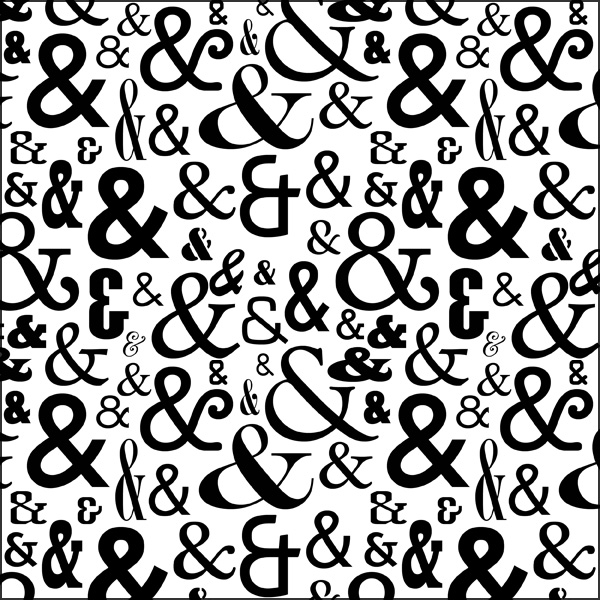
&&&&&&&&&&&&&&&&&&&&&&&&&&&&&&&&&&&&&&&&&&&&&&&&&&&&

This week, I decided that rather than examining written knowledge on a large scale, I’d focus on one very specific piece of our written knowledge tradition: the ampersand. In case you didn’t know, “ampersand” is the name for the “and” symbol that looks like this: 


Tuesday, October 25, 2011

A Roman Alphabet and Arabic Numerals

Sorry to break the trend, but I am going to step away from the idea of mediums ... and into the realm of numbers.
The Evolution of Numbers


I don't know if I have said this previously, but I love the etymology of words, and knowing the origins of things and what that can teach us about the thing itself, whether it is whole words or letters or numerical symbols.  That's partly why I was so happy I got the Phoenician civilization, because it had the first alphabet (basically).  But as I have continued to study the alphabet and where ours came from (if you can't find "Letter Perfect" at the library, it is because I have it :-),  the thought occurred to me: if we use the Roman alphabet, why don't we use Roman numerals too?  Where did the Arabic ones come from?

Saturday, October 22, 2011

Choosing a Medium

I really enjoyed Mike's post about the metal plates and it started me wondering, is there a correlation between the medium used and the kind of document preserved? There are records from the Chinese preserved on wood, bamboo, silk, stone, paper, metal, and ceramic. I hypothesized that more domestic things would be preserved on ceramic, silk, and bamboo while the official institutional documents would be kept on paper, metal, and stone.

Thursday, October 20, 2011

Scraping Metal

This golden disk found in Peru is an contains
an inscription of a calendar system.
A few months ago they played a special on the Discovery channel about  discoveries of America before Columbus.  After talking about various theories about who were actually the first people to travel to the New World, they came to the conclusion that pretty much everyone discovered America at one point in time.  They finally changed their question from "Who discovered America?" to "Who didn't discover America?".  Well today I am not going to talk about the discovery of America but the making of metal books.  To those of us who are LDS (such as members of our Reinventing Knowledge class here at BYU) metal plate writings might be of special interest because the Book of Mormon was translated from an ancient record engraved on golden plates.  Although engravings on metal plates were at one point thought of as a rare occurrence, recent discoveries have shown more and more examples of this form of information storage.  As you will see in this post, we might pose ourselves a similar question:

"Who didn't write on metal plates?"

Tuesday, October 18, 2011

The Origins of the Alphabet, Phoenician Style

In the beginning, there were Egyptian hieroglyphs and Mesopotamian cuneiform.  From that sprung the 22-letter Phoenician alphabet that is the Mother of every other alphabetic system known to man.


Saturday, October 15, 2011

Khmer--the language this time

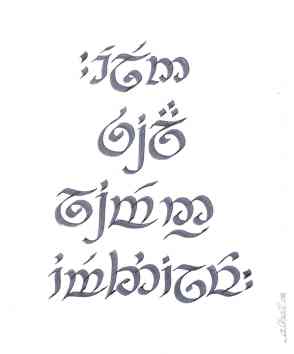
Elvish

Khmer
All growing up my family read Lord of the Rings by JRR Tolkien. I loved the story and the poetry and I loved the funny writing on the cover. How great was my surprise when, preparing to serve a mission for the LDS church, I encountered another missionary with the Bible in what appeared to be elvish. I had no idea that that language actually existed outside of Middle Earth. The missionary was going to Cambodia, not Middle Earth and the language was sadly not elvish but Khmer.

Friday, October 14, 2011

The Linear B Script.

Ancient Greek civilizations are famous for their developments in language and communication. One such civilization is the Mycenaean civilization, which I have researched about in my last couple of blog posts. Originally, only those who held religious authority or political power were taught how to orate properly. It wasn't until philosophers, Socrates and Plato, had popularized speech, that the common Mycenaean people began to use oration as an authoritative and scholastic means of communication. However, Aristotle, a student of Plato, argued that speech was not the only means or even the most important mean of communication. He believed the written language was. 

Basic Linear B syllabary.

Thursday, October 13, 2011

Sitting on the Fence . . . For Thousands of Years

As we began this unit on written knowledge, I was rather excited.  I love hand writing and different symbols and everything that has to do with writing.  The power of the written word is something I have loved ever since I learned to read.  I suddenly became disappointed when I realized that I needed to talk about writing within the Hopi culture, mostly because they do not have an alphabet.  I guess that kind of puts a damper on writing if you don't have an alphabet.  Luckily as I have studied out the topic, I have realized that the Hopi language and people can give us a lot of cool clues as to how writing systems are developed because they stayed with a transitionary step to developing writing systems - the pictograph.
The famous "Hopi Prophecy Rock" - Said to depict
the consequences of not living in harmony
with the earth.  Says that if we don't there will be a
WWIII-like cataclysmic event. 

Wednesday, October 12, 2011

Etruscan Writing and Language


The writing system of the Etruscans is highly correlated with other Indo-European systems (particularly Greek), but the language of the Etruscans is quite the opposite. Linguists have a hard time placing it within a language family, and it seems fairly isolated.